What Is an EIN? A Complete Guide for Business Owners (2026)
Starting a business comes with paperwork, decisions, and—let’s be honest—a fair bit of confusion. One term you’ll hear early on is EIN. It sounds technical, but once you understand it, things become much clearer.
This guide explains everything in simple terms: what an EIN is, how to use it, how it compares to other registration numbers, and how to get one—especially if you’re registering in Colorado. If you’re building your business through https://orbitfiling.com/, this will help you move with confidence.
What Is an EIN?
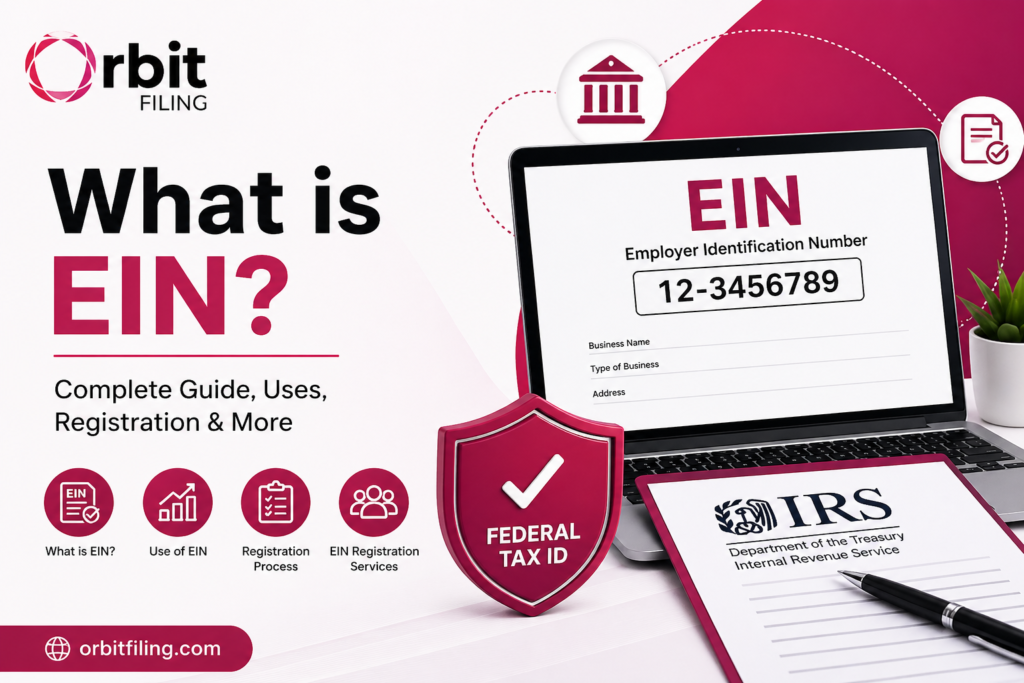
An Employer Identification Number (EIN) is a unique nine-digit number issued by the Internal Revenue Service (IRS). It works like a Social Security Number—but for your business.
The IRS uses this number to identify your business for tax purposes. Whether you run a startup, partnership, or corporation, the EIN acts as your official tax ID.
Simple Example:
- Your SSN = Your personal identity
- Your EIN = Your business identity
Without it, your business can’t legally handle many financial and tax-related activities.
Why Is an EIN Important?
Let’s cut through the noise: you need an EIN if you want your business to function properly in the U.S.
Here’s why:
1. Tax Filing
You use your EIN when filing federal taxes. The IRS tracks your business activities through this number.
2. Hiring Employees
If you plan to hire employees, the IRS requires you to have an EIN. No exceptions.
3. Opening a Business Bank Account
Most banks won’t let you open a business account without an EIN. It separates your personal and business finances.
4. Applying for Licenses and Permits
State and local authorities often ask for your EIN when issuing business licenses.
5. Building Business Credit
You need an EIN to establish credit under your business name, not your personal identity.
Use of EIN in Real Business Scenarios
Understanding theory helps, but real use cases make it stick. Here’s where businesses use EINs daily:
- Filing tax returns and payroll taxes
- Paying employees legally
- Applying for business loans
- Registering for sales tax (in some states)
- Working with vendors and suppliers
- Filing annual reports
Think of EIN as your business passport—it shows up everywhere.
EIN Registration Services
While you can apply directly through the IRS, many businesses choose EIN registration services to avoid errors and save time.
Why Use a Service?
- Reduces mistakes in the application
- Saves time for busy entrepreneurs
- Helps with compliance and documentation
- Offers guidance for first-time business owners
Platforms like https://orbitfiling.com/ simplify the process by combining EIN registration with full business formation support.
EIN Registration Process (Step-by-Step)
You don’t need to guess here. The IRS provides a structured process.
Step 1: Determine Eligibility
You must have a valid taxpayer identification number (SSN or ITIN).
Step 2: Choose Application Method
- Online (fastest)
- Fax
The IRS recommends online applications for immediate results.
Step 3: Provide Business Details
You’ll submit:
- Business name
- Structure (LLC, corporation, etc.)
- Address
- Responsible party details
Step 4: Receive EIN
If you apply online, you get your EIN immediately after approval.
Colorado EIN Registration
If you’re forming a business in Colorado, the EIN process stays the same at the federal level—but your state requirements may differ.
What’s Unique in Colorado?
- You must register your business with the Colorado Secretary of State
- You may need a state tax ID in addition to your EIN
- Sales tax registration applies depending on your business type
Pro Tip:
Many entrepreneurs confuse state registration with EIN registration. They are separate processes.
Using a service like Orbit Filing helps you handle both at once without missing steps.
Business Registration Number vs EIN
This is where confusion starts for many new business owners.
Business Registration Number (BRN)
Issued by your state when you register your business legally.
EIN
Issued by the IRS for federal tax purposes.
Key Differences:
| Feature | EIN | Business Registration Number |
|---|---|---|
| Issued By | IRS | State Government |
| Purpose | Federal taxes | Legal business identity |
| Required For | Taxes, hiring, banking | Operating legally in state |
👉 Bottom line: You often need both.
Company Registration Number vs EIN
The term Company Registration Number often means the same as a state-issued number, but usage varies by region.
In the U.S.:
- Company Registration Number = State-issued ID
- EIN = Federal tax ID
They serve different roles but work together.
Is Company Registration Number the Same as EIN?
Short answer: No, they are not the same.
Let’s make it crystal clear:
- EIN = Federal tax identification
- Company Registration Number = State-level business identity
You can’t replace one with the other. If your business operates legally and pays taxes, you’ll likely need both.
EIN for Different Business Types
Not every business has the same requirements.
Sole Proprietors
- May not need EIN (if no employees)
- Can use SSN instead
LLCs
- Usually need EIN
- Required if multiple members
Corporations
- Always require EIN
Nonprofits
- Must have an EIN to apply for tax-exempt status
Common Mistakes to Avoid
Even experienced founders slip up here.
1. Applying Too Early or Too Late
Timing matters. Apply after business formation, not before.
2. Entering Incorrect Information
Errors can delay approval or cause compliance issues.
3. Confusing EIN with State IDs
This mistake leads to rejected applications and legal headaches.
4. Using Personal SSN Instead of EIN
This exposes you to unnecessary risk and limits business growth.
Benefits of Getting an EIN Early
Smart entrepreneurs don’t wait.
Here’s why early registration helps:
- Faster business bank account setup
- Easier vendor onboarding
- Smooth tax filing
- Builds credibility
It shows you’re serious—and organized.
EIN and Business Growth
An EIN isn’t just a requirement—it’s a growth tool.
How It Helps You Scale:
- Enables hiring employees
- Supports loan applications
- Builds separate business credit
- Allows expansion into multiple states
In short, no EIN = limited growth.
Trusted Source & Compliance
The most reliable information about EIN comes directly from the IRS. You can always verify details through the Internal Revenue Service website.
Using verified sources builds trust—not just with search engines, but with your customers too.
Why Choose Professional EIN Registration?
You could do it yourself—but should you?
When Services Make Sense:
- You’re starting your first business
- You want to avoid delays
- You need bundled services (LLC + EIN + compliance)
- You value time over trial-and-error
Platforms like https://orbitfiling.com/ streamline the entire process so you don’t have to juggle multiple systems.
Final Thoughts
An EIN might look like just another number—but it plays a central role in your business journey.
It connects your business to the IRS, enables financial operations, and supports long-term growth. More importantly, it separates you from your business legally and financially.
If you remember one thing, remember this:
👉 Your EIN is your business identity in the federal system.
Get it right, get it early, and use it wisely.
Quick Recap
- EIN = Federal tax ID issued by the IRS
- Required for hiring, taxes, and banking
- Different from state registration numbers
- Essential for business growth and compliance
- Easy to obtain—but mistakes can cost time
If you’re planning to register your EIN or start your business, using a structured platform like https://orbitfiling.com/ can save you time, reduce errors, and help you stay compliant from day one.
